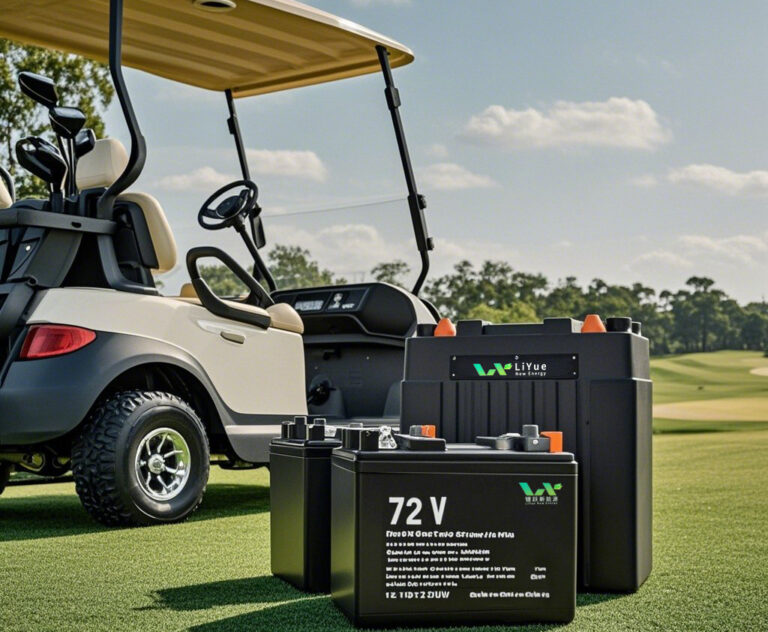
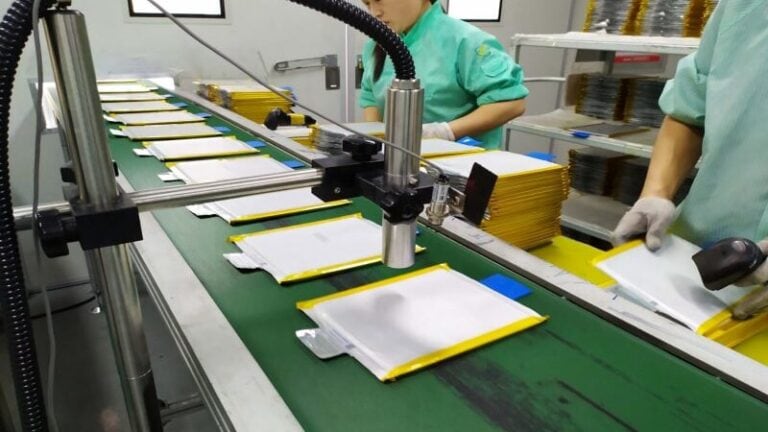
Henan Liyue New Energy Co., Ltd















BYD Second-Generation Blade Battery: Breakthrough or Hype?
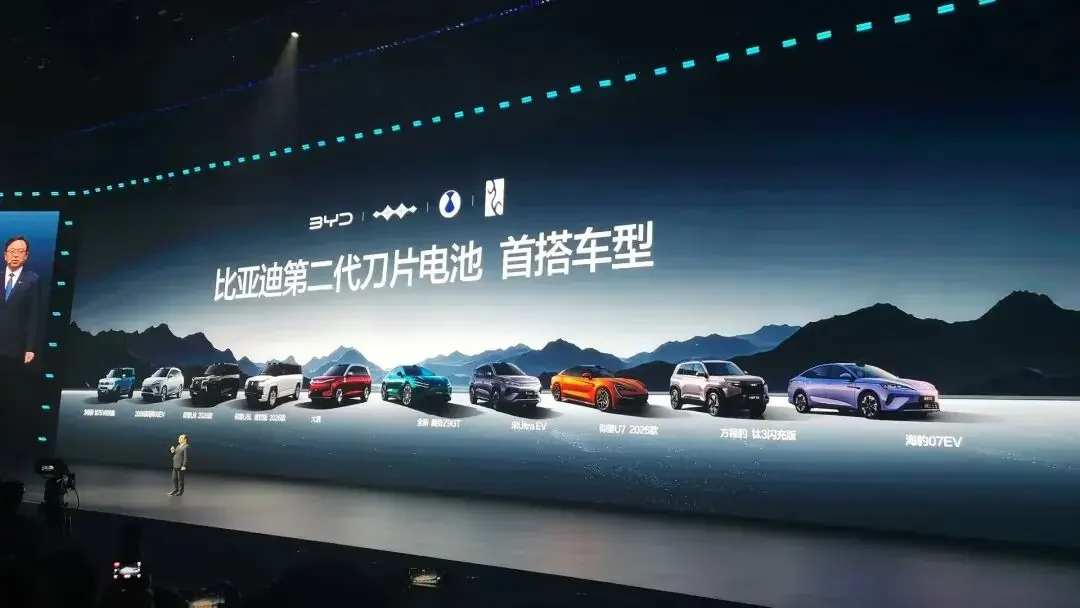
BYD’s second-generation Blade Battery has finally been unveiled after six years of development, generating widespread industry attention. With claims of 5-minute fast charging for 400 km range, 200 Wh/kg system energy density, Und 4,000+ cycle life, it promises to redefine LFP performance. But are these breakthroughs ready for prime time? As a professional lithium battery manufacturer specializing in LiFePO4 pouch cells, we offer a technical deep dive.
1. Technical Highlights: LMFP + Silicon-Carbon Anode + Specialized Electrolyte
The second-generation Blade Battery’s core advancement lies in a complete material system overhaul:
A. Cathode: Lithium Manganese Iron Phosphate (LMFP)
By introducing manganese into lithium iron phosphate (LFP), the voltage platform increases from 3.2V to 3.8V, boosting system energy density to 190-210 Wh/kg—a 36% improvement over the first generation. The olivine structure’s thermal stability is preserved, passing nail penetration tests with no flames, no smoke, and surface temperatures of only 30-60°C, maintaining the “no thermal runaway” safety record.
Technical significance: LMFP theoretically combines LFP’s safety with high-voltage performance, but manganese dissolution and side reactions have long plagued commercial adoption. BYD claims to suppress manganese dissolution through dual-layer coating (intermediate layer + carbon coating) to enhance cycle stability. According to Battery University, such coatings are critical for LMFP viability.
B. Anode: Silicon-Carbon Material
Silicon-carbon anodes dramatically improve energy density but face challenges with silicon expansion (up to 300%) and low first-cycle efficiency. BYD employs nanonization + carbon coating to balance capacity and cycling stability. However, given CATL’s earlier quality fluctuations with silicon-carbon products, consistency and long-term reliability remain to be market-verified.
C. Electrolyte: Gradient Design + Nano Additives
The specialized electrolyte features gradient concentration distribution, reducing internal resistance and supporting 8C-10C ultra-fast charging. Paired with 1500 kW megawatt flash charging stations, it achieves 5-minute charging for 400 km range. Low-temperature performance claims are impressive: -30°C charging takes only 3 minutes longer than room temperature, enabled by low-viscosity solvents and intelligent thermal management systems. Theoretical cycle life reaches 4,000 cycles, with real-world applications expected to support 8 years / 1.2 million km+.
2. Technical Challenges Behind the Breakthrough
Despite impressive specifications, several key questions remain from a materials engineering perspective:
| Technical Point | Herausforderung | Branchenlösungen |
|---|---|---|
| LMFP Cathode | Manganese dissolution causing capacity fade, poor high-temperature cycle life | Dual-layer coating, electrolyte additives |
| Silicon-Carbon Anode | Volume expansion (300% for silicon), unstable SEI film | Nanonization, pre-lithiation, elastic binders |
| Ultra-Fast Charging | Lithium plating risk at high rates, thermal management pressure | Low-impedance design, dual-chip BMS, individual cell temperature monitoring |
Whether BYD can solve these challenges in mass production depends on material purity, process control, and consistency. Laboratory data and scaled manufacturing often tell different stories.
3. Comparison: Second-Gen Blade vs First-Gen vs NMC
The table below provides a detailed comparison of the key specifications:
| Artikel | 2nd-Gen Blade | 1st-Gen Blade | Standard NMC |
|---|---|---|---|
| Zykluslebensdauer | >4,000 cycles | 3,000 cycles | 1,500-2,000 cycles |
| Lebensdauer | ~15 years | 8-10 years | ~8 years |
| Energiedichte | ~200 Wh/kg | 140 Wh/kg | ~200 Wh/kg |
| Sicherheit | No thermal runaway in nail penetration, fast charging at -30°C | High | Relatively low |
The second-generation Blade approaches medium-nickel NMC energy density while retaining LFP’s safety and longevity advantages—truly redefining LFP’s “ceiling.”
4. Market Validation: The Proof Is in the Product
Technical conference’s impressive data aside, the real test lies in mass production consistency Und long-term reliability. As industry observers note: “Fast charging is the only standout feature,” while cathode and anode material stability remain unproven over time.
For light electric vehicles and energy storage markets, stability trumps peak performance. This is precisely why LiYue-Batterie adheres to mature LiFePO4 processes + customized design—we don’t chase extreme specifications but focus on 3,000-10,000+ cycle real-world performance, plus the flexibility and cost-effectiveness of soft pack pouch cells.
5. The LiYue Battery Perspective
At LiYue-Batterie, we’ve spent years perfecting LiFePO4 soft pack technology rather than pursuing headline-grabbing specifications. As a dedicated lithium battery manufacturer since 2001, our approach delivers:
| Vorteil | Why It Matters |
|---|---|
| 3,000-10,000+ cycles | 8-15 years of reliable service, lower TCO |
| 20-40% lighter | Better efficiency for golf carts, EVs, RVs |
| Soft failure mode | Swells and vents—no violent explosion |
| Custom dimensions | Fits your exact battery compartment |
| Source factory pricing | No middleman markups |
| Grade A materials only | No B-cells, no recycled content |
While BYD’s Blade technology pushes LFP boundaries, many applications don’t require the absolute latest innovation—they require proven reliability, perfect fit, and cost-effectiveness.
Conclusion: Innovation Continues, But Proven Solutions Deliver
BYD’s second-generation Blade Battery represents a significant leap forward for LFP technology, particularly in fast charging and energy density. However, new material commercialization is never straightforward—technical breakthroughs require rigorous engineering validation.
At LiYue Battery, we follow industry advancements closely while delivering what our customers need today: mature, reliable, customizable LiFePO4 soft pack cells mit factory-direct pricing Und engineering support from concept to production. Visit our lithium battery manufacturer page to learn how we can power your next project.
Whether you’re building energy storage systems, upgrading golf cart fleets, or designing specialized EVs, our team is ready to collaborate.
📞Contact Our Engineering Team
Tags: BYD blade battery, LiFePO4 vs blade battery, LMFP battery technology, silicon carbon anode, fast charging lithium battery, lithium battery manufacturer