Henan Liyue New Energy Co., Ltd
















48V Marine Lithium Battery Hybrid Power System Upgrade for a 90ft Sailing Yacht
Modern yacht owners are rapidly moving away from traditional lead-acid battery systems and continuously running AC generators. As onboard energy demand increases, hybrid marine lithium battery systems are becoming the preferred solution for large sailing yachts and offshore vessels.
This project involves a 90-foot sailing yacht currently operating on a traditional American-standard 120/240V 60Hz electrical system. The vessel originally relied on a 12kW AC generator combined with a conventional lead-acid battery bank. The owner is now planning a complete modernization of the onboard power architecture by transitioning to a high-capacity 48V lithium energy storage system integrated with a DC generator-driven charging platform.
The objective is to create a quieter, more efficient, lower-maintenance marine energy system capable of supporting long-range cruising, marina compatibility, and stable onboard power management.
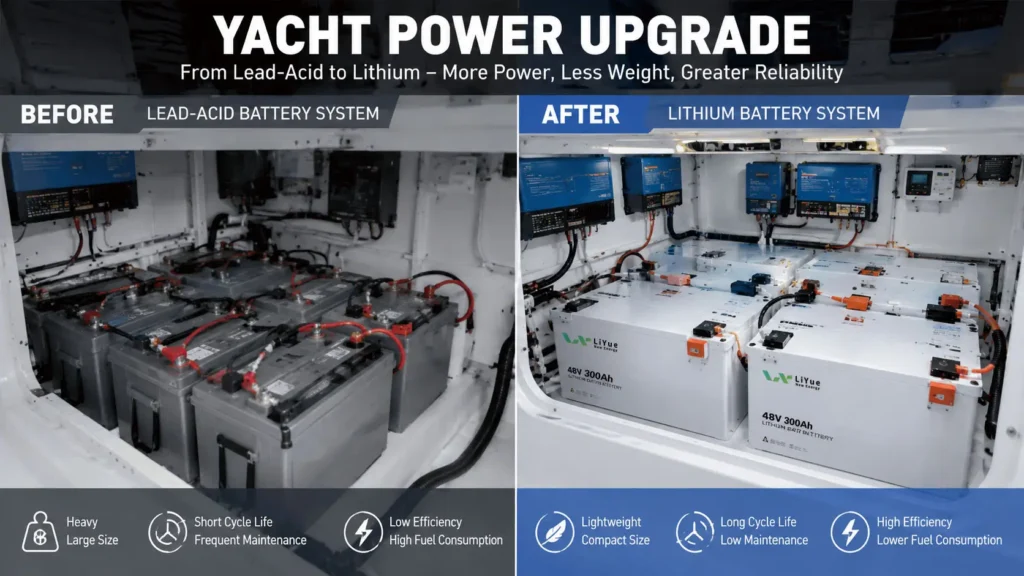
Existing Yacht Power System Overview
The yacht currently operates using:
- 120/240V 60Hz split-phase onboard electrical architecture
- Traditional lead-acid battery bank
- 12kW AC generator system
- Shore power charging capability
- Small solar maintenance charging panel
As onboard electrical loads continue to grow, many yacht owners are now upgrading to marine lithium battery hybrid systems that offer significantly higher efficiency and energy independence.
Transitioning from AC Generator Architecture to DC Charging Architecture
One of the most important aspects of this project is the planned replacement of the existing AC generator with a 12kW DC generator system.
Unlike traditional marine generators that directly supply AC power to onboard loads, the new generator configuration will primarily function as a high-power DC charging source for the lithium battery bank.
The proposed DC generator specifications include:
| Parameter | Specification |
|---|---|
| Rated Power | 12kW |
| Output Voltage | 48V DC |
| Output Current | 250A |
| Speed | 1800 RPM |
| Protection Rating | IP21 |
This configuration represents a modern marine hybrid energy architecture where the lithium battery system becomes the central energy hub of the yacht.
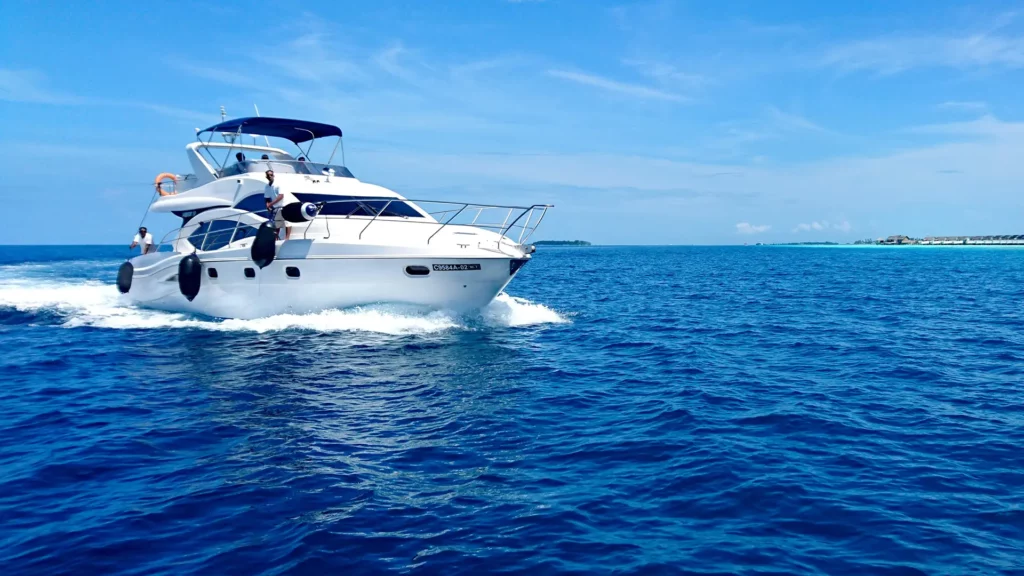
Instead of running the generator continuously, the yacht can operate primarily from the battery bank while the DC generator charges the batteries only when required.
This approach provides several advantages:
- Reduced fuel consumption
- Lower engine operating hours
- Improved onboard comfort
- Reduced generator noise
- Faster charging performance
- More stable onboard power distribution
60kWh Marine Lithium Battery System Design
To support the yacht’s operational requirements, the owner is planning to install a minimum 60kWh LiFePO4 marine battery system.
For marine applications, battery design requirements are significantly more demanding than standard residential or commercial energy storage systems.
Critical marine battery requirements include:
IP67 Waterproof Protection
Marine battery systems must withstand:
- Salt air exposure
- High humidity
- Splash protection
- Offshore environmental conditions
- Long-term corrosion resistance
An IP67-rated enclosure is highly recommended for marine safety and reliability.
Advanced Marine BMS Integration
The battery management system should support:
- CAN bus communication
- Victron compatibility
- Cell balancing
- Temperature monitoring
- Overcurrent protection
- Short-circuit protection
- Remote monitoring integration
For large yacht systems, seamless communication between the battery bank and inverter system is essential for stable operation and accurate state-of-charge monitoring.
Hybrid Charging Architecture for Global Yacht Operation
One major challenge for international yacht applications is shore power compatibility across different regions.
This yacht requires compatibility with:
USA & Caribbean Shore Power
- 240V
- 60Hz
European Marina Shore Power
- 220V
- 50Hz
The proposed system therefore requires intelligent frequency and voltage adaptation capabilities.
In addition to shore power charging, the yacht also includes a small solar charging system designed primarily for battery maintenance during docking or unattended storage periods.
The charging priority logic is expected to include:
- DC generator priority charging
- Shore power charging integration
- Solar maintenance charging support
This type of multi-source charging architecture is becoming increasingly common in modern yacht hybrid systems.
Recommended Inverter Architecture for 120/240V Split-Phase Output
For North American yacht applications, split-phase 120/240V inverter output is critical.
The owner is currently considering a dual inverter configuration based on:
- 2 × Victron Quattro 48/15000 units
- 48V battery input
- 15,000VA inverter capacity per unit
- Integrated 200A charger
- Automatic transfer switching capability
When configured in parallel, the system can provide approximately:
- 30,000VA total inverter capacity
- 10kW continuous power output
- Up to 24kW peak surge capability
This high surge capability is particularly important for marine applications involving:
- Hydraulic systems
- Watermaker startup loads
- Air conditioning compressors
- Pumps
- Heavy inductive loads
A properly configured split-phase inverter system ensures stable onboard power distribution while maintaining compatibility with US marina electrical infrastructure.
Conclusion
Modern yacht electrical systems are rapidly evolving toward lithium-based hybrid energy architectures.
If you also want to customize a set of lithium iron phosphate batteries, please contact our team. We have a lithium battery factory in China with an annual production capacity of 2 GWh, designed to handle bulk lithium battery orders.