เหอหนาน Liyue ใหม่พลังงาน Co., Ltd















Comparing Single-Phase vs. Three-Phase Power for Thai Homes
When building, renovating, or upgrading a substantial home in Thailand, one critical but often overlooked question is: single-phase or three-phase power? This isn’t just a technicality—it’s a decision that affects your home’s electrical capacity, appliance compatibility, and future expansion, especially with solar and EV charging. This guide cuts through the complexity, explaining what each option means for Thai villa and home owners.

Basic Principles: The Difference Explained
- Single-Phase Power (1ɸ): The standard for most Thai homes and small businesses. It uses one active wire and one neutral wire to deliver a 220-230V supply. It’s simpler and adequate for loads up to a typical 15(45)A or 30(100)A meter from the Provincial Electricity Authority (PEA).
- Three-Phase Power (3ɸ): Used in larger buildings, factories, and high-demand homes. It combines three alternating currents, each out of phase with the others, delivering 220-230V per phase and 380-400V between phases. Think of it as three single-phase lines working together.
Comparison: Which is Right for Your Thai Villa?
| Consideration | Single-Phase Power | Three-Phase Power |
|---|---|---|
| Typical Supply Capacity | Limited (e.g., 15kW max). Suits most standard homes. | Much Higher. Essential for large villas (>500 sq.m.), multiple ACs, large pools, elevators, workshops. |
| Appliance Compatibility | Runs all standard 220V appliances. | Required for specific high-power 380V equipment (large pumps, industrial machinery, some EV fast chargers). Standard 220V appliances use just one of the three phases. |
| Solar System Integration | Compatible with most hybrid inverters. Simple setup. | Often preferable. Allows for balanced three-phase hybrid inverters, distributing solar generation and lithium battery backup evenly across all home circuits. Prevents phase imbalance. |
| Voltage Stability | Can experience noticeable “lights dimming” when large motors (like AC compressors) start. | More stable. High-load appliances don’t cause the same voltage drop on the entire system. |
| Upfront Cost & Process | Standard connection. Lower cost, simpler PEA application. | Higher cost. May require a transformer upgrade, special meter, and more complex wiring. PEA approval can involve more paperwork and fees. |
| Future-Proofing | May limit addition of multiple EV chargers, large heat-pump pools, or home workshops. | Highly future-proof. Easily accommodates additional high-demand loads without needing a full system overhaul. |
Key Decision Factors for Your Situation
Ask yourself these questions:
- What is Your Total Connected Load? Calculate the wattage of all major appliances (ACs, water heaters, pool pumps, oven). If it exceeds 15-20kW, three-phase becomes necessary.
- Do You Plan for Electric Vehicle (EV) Charging? A single 7kW EV charger may run on single-phase. However, if you plan for multiple chargers or a 22kW+ fast charger, three-phase is mandatory.
- Are You Installing a Large Solar/Battery System? For systems above 10kW, a three-phase hybrid inverter is often recommended to avoid overloading a single phase and to provide balanced backup power to all circuits in the house.
- What Does Your Local PEA Office Advise? They will assess the existing infrastructure in your area. In some locations, three-phase may not be readily available, or costs may be prohibitive.
The Solar & Battery System Connection
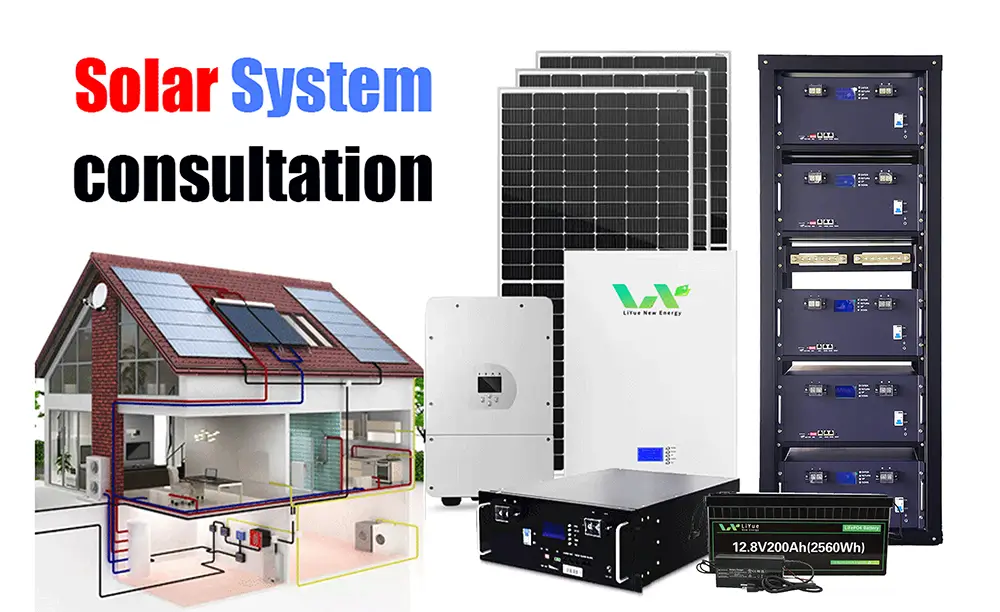
This is crucial. If you have a three-phase home supply but install a single-phase hybrid inverter, the backup power will only be supplied to circuits on that one phase during a blackout. A three-phase hybrid inverter ensures all phases are backed up and manages solar feed-in across all phases to comply with PEA regulations and prevent imbalance penalties.
Conclusion: Investing in the Right Electrical Foundation
For a modest-sized villa with standard appliances, single-phase power is likely sufficient and cost-effective. However, for large luxury villas, homes with significant electrical loads, or owners planning for future tech like EVs and large solar arrays, investing in a three-phase supply from the start is a wise decision that provides capacity, stability, and flexibility.
Consult with our energy experts
We can help analyze your load requirements and guide you through the planning for both your grid connection and solar system integration.